
Explosion Bonding: Process, Applications and Benefits
Explosion bonding is a solid-state cold pressure welding process used to join dissimilar metals without melting them. By using controlled explosive energy, this technique creates a high-strength atomic bond between materials with very different properties.
This capability makes it possible to manufacture high-performance clad plates, tube sheets and transition joints for demanding industries such as oil & gas, offshore, energy, chemical processing and other demanding sectors.
At Shockwave Metalworking Technologies, we specialize in vacuum explosion bonding, an advanced process that enhances bond quality and delivers reliable, high-integrity solutions for critical environments where conventional joining methods are not suitable. This makes this process one of the most effective and versatile technologies for joining dissimilar metals in industrial applications.
What is Explosion Bonding
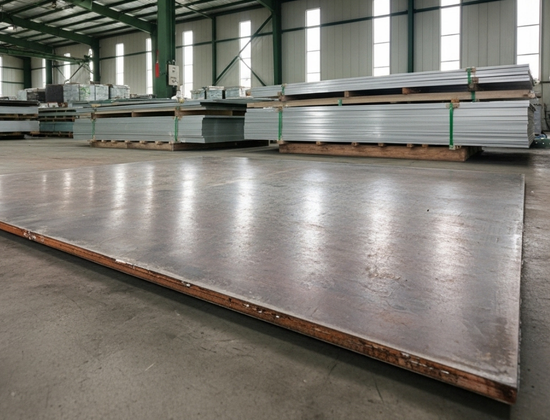
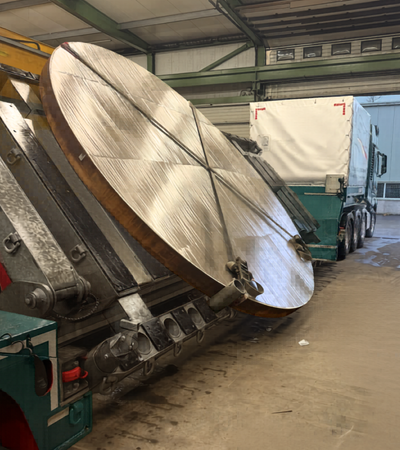
Explosion bonding (also known as explosion cladding or explosion welding) is a solid-state process that joins two different metals through controlled explosive energy, without changing the mechanical nor chemical material properties.
During the process, a controlled detonation generates a high-velocity impact between the metals, creating a metallurgical bond at the interface. This produces a jetting phenomenon, which removes surface contaminants and enables direct metal-to-metal contact at the atomic level.
The result is a wavy metallurgical interface, characteristic of explosion bonding, which provides exceptional bond strength and long-term reliability even under extreme conditions.
Because of these properties, explosion cladding is widely used in industries where performance, durability and corrosion resistance are critical.
How Explosion Bonding Works
The process begins by placing two metal plates at a controlled stand-off distance. An explosive charge is then detonated, generating a high-velocity impact between the materials.
As the detonation propagates, it forces one plate into the other at high velocity. This impact generates a bond through plastic deformation at the interface, resulting in a strong and continuous connection.
Key characteristics of the process:
- No melting materials
- Minimal heat-affected zone
- Strong metallurgical bonding
- Ability to join incompatible metals
- Large surface bonding capability
At Shockwave, we apply this technology through vacuum explosion bonding, which provides enhanced control, reduces oxidation and ensures superior bond consistency.
Vacuum Explosion Bonding: Enhanced Process Control
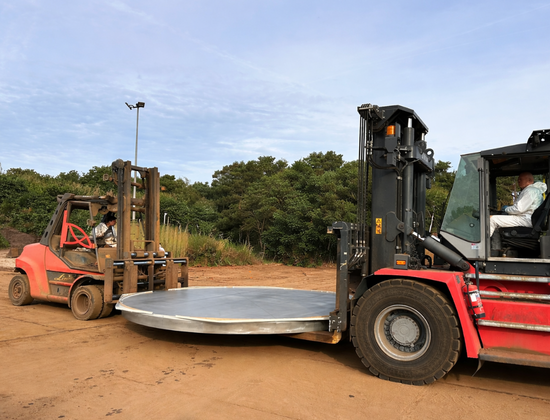
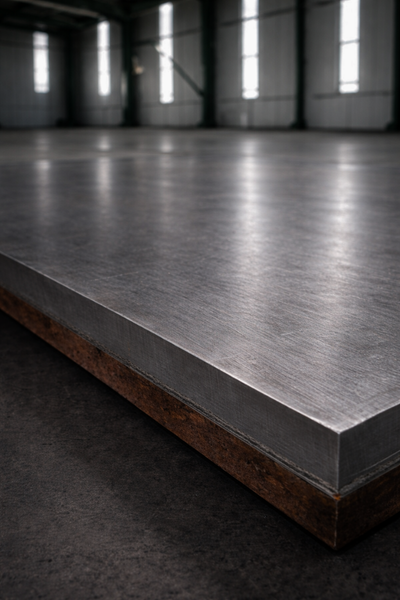
Vacuum explosion bonding is an advanced variation of the conventional process, where bonding is performed in a controlled vacuum environment.
By eliminating the presence of air and reducing oxidation, vacuum conditions improve the cleanliness of the interface and enhance bond quality.
This results in:
- Improved metallurgical integrity
- Reduced risk of contamination
- Greater process consistency
- Enhanced performance in critical applications
- No microcracks at the bonding interface
At Shockwave, vacuum explosion bonding is a core capability, enabling us to deliver high-reliability solutions for demanding industries such as energy, offshore and chemical processing.
Key Advantages of Explosion Bonding
This process offers significant advantages compared to conventional joining methods, especially in high-performance and critical reliability industrial applications.
It enables the combination of metals that cannot be joined through traditional welding, opening new possibilities in engineering design.
Because no melting occurs, thermal distortion is avoided and the original properties of both materials are preserved. The resulting bond is extremely strong and reliable in demanding environments.
Other key benefits include:
- Excellent mechanical strength
- Superior corrosion resistance
- Cost efficiency compared to solid alloys
- Scalability for large components
Common Material Combinations
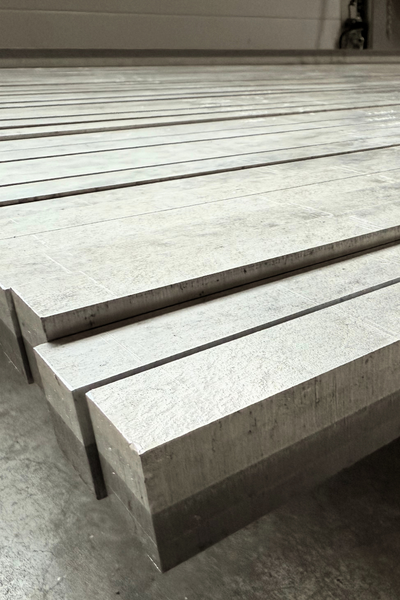
Typical material combinations include:
- Aluminium to steel
- Titanium to stainless steel
- Copper to aluminium
- Nickel alloys to carbon steel
- Stainless steel to carbon steel
- And many more
These combinations are essential in applications where both mechanical strength and corrosion resistance are required, particularly in demanding industrial environments.
In many cases, such material combinations cannot be achieved using conventional welding techniques due to differences in melting point, thermal expansion and metallurgical compatibility. For this reason, explosion cladding has become a key solution in advanced engineering applications through high-velocity solid-state bonding.
Main Industrial Applications
Explosion bonding is used in industries where materials must perform under extreme conditions and long service life is required:
- Oil & Gas: clad plates and transition joints for pressure vessels, pipelines and process equipment operating under high pressure and corrosive conditions
- Naval & Offshore: structural transition joints such as Triplate® provide durability and corrosion resistance in aggressive marine environments
- Chemical & Petrochemical: equipment designed to withstand high temperatures and corrosive substances
- Power Generation: components used in heat exchangers and critical infrastructure requiring high reliability
- Energy Transition: increasingly relevant in hydrogen, LNG and renewable energy applications
Desalination Plants: corrosion-resistant clad plates used in seawater desalination systems, where resistance to chlorides and harsh environments is essential.

Explosion Bonding vs Other Joining Methods
Compared to traditional joining methods such as welding, brazing or rolling, explosion bonding offers unique benefits:
Method | Limitation | Advantages of Explosion bonding |
| Welding | Heat distortion | No melting, no distortion |
| Rolling | Limited material combinations | Wide material compatibility |
| Brazing | Lower strength | Strong metallurgical bond |
Products and Solutions
This process enables the production of high-performance industrial components designed for demanding environments:
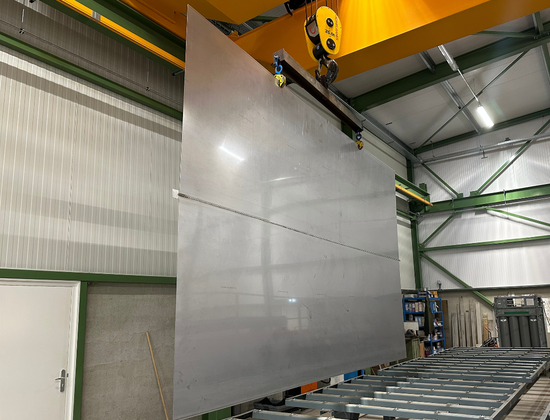
- Clad Plates: composite plates combining corrosion-resistant materials with structural strength
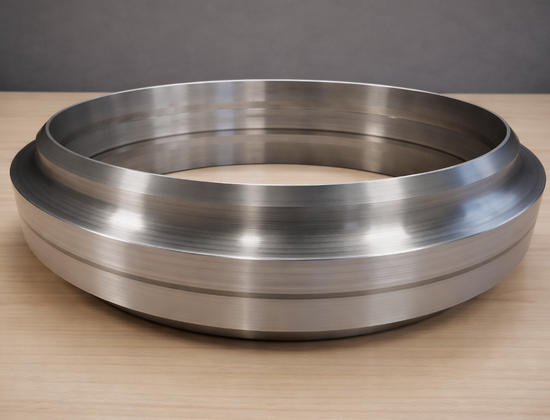
- Transition Joints: engineered solutions for joining dissimilar metals in pipelines and structures
- Tube Sheets: used in heat exchangers, offering excellent mechanical strength and corrosion resistance
These products are widely used in industries requiring high-performance materials and long-term reliability.
Joining Dissimilar Metals
One of the main advantages of explosion bonding is its ability to join dissimilar metals that are difficult or impossible to weld using traditional methods, a major challenge in modern engineering.
Our process addresses this issue by avoiding melting and enabling a direct metallurgical bond between materials.
Examples include:
- Aluminium to steel
- Copper to aluminium
- Titanium to stainless steel
This capability is essential in industries where different material properties must be combined.
Why Choose Shockwave Clad for Explosion Bonding
At Shockwave, we specialize in vacuum explosion bonding technology, ensuring high-quality results for demanding industrial applications.
Our capabilities include:
- Advanced process control and engineering expertise
- Consistent manufacturing quality
- Tailored solutions for complex requirements
- Experience in high-performance industries.
Our vacuum-based process provides superior control compared to conventional welding process, resulting in cleaner interfaces, improved consistency and higher reliability in critical applications.
Looking for Explosion Bonding Solutions?
Contact our team to discuss your project requirements and discover how Shockwave can provide reliable explosion bonding solutions
FAQs about Explosion Bonding
What is explosion bonding used for?
It is used to join dissimilar metals for industrial applications requiring high strength and corrosion resistance.
Is explosion bonding better than welding?
In applications involving dissimilar metals, it often provides superior performance compared to traditional welding methods because it avoids melting and preserves material properties.
What is the difference between explosion bonding, explosion welding and explosion cladding?
All terms refer to the same process, although “explosion bonding” is more commonly used in industrial contexts.
What materials can be bonded using this process?
A wide range of metals can be combined including aluminium, steel, titanium, copper and stainless steel.
What is the difference between explosion bonding and traditional welding?
Explosion bonding joins metals without melting them, using a high-velocity impact created by controlled explosive energy. In contrast, traditional welding uses heat to melt the materials, which can cause distortion and limit the ability to join dissimilar metals.
As a solid-state process, explosion bonding preserves material properties and is better suited for high-performance applications.
Why is explosion bonding important in industry?
It allows engineers to combine materials with different properties, improving performance and extending component lifespan.